By Mayank Bhardwaj · August 20, 2026 · 2 min read
Memento mori, practically: using mortality as a focusing tool (gently)
From Stoic Rome to lock-screen wallpapers — how remembering death became a productivity practice, and how to do it without the gloom.
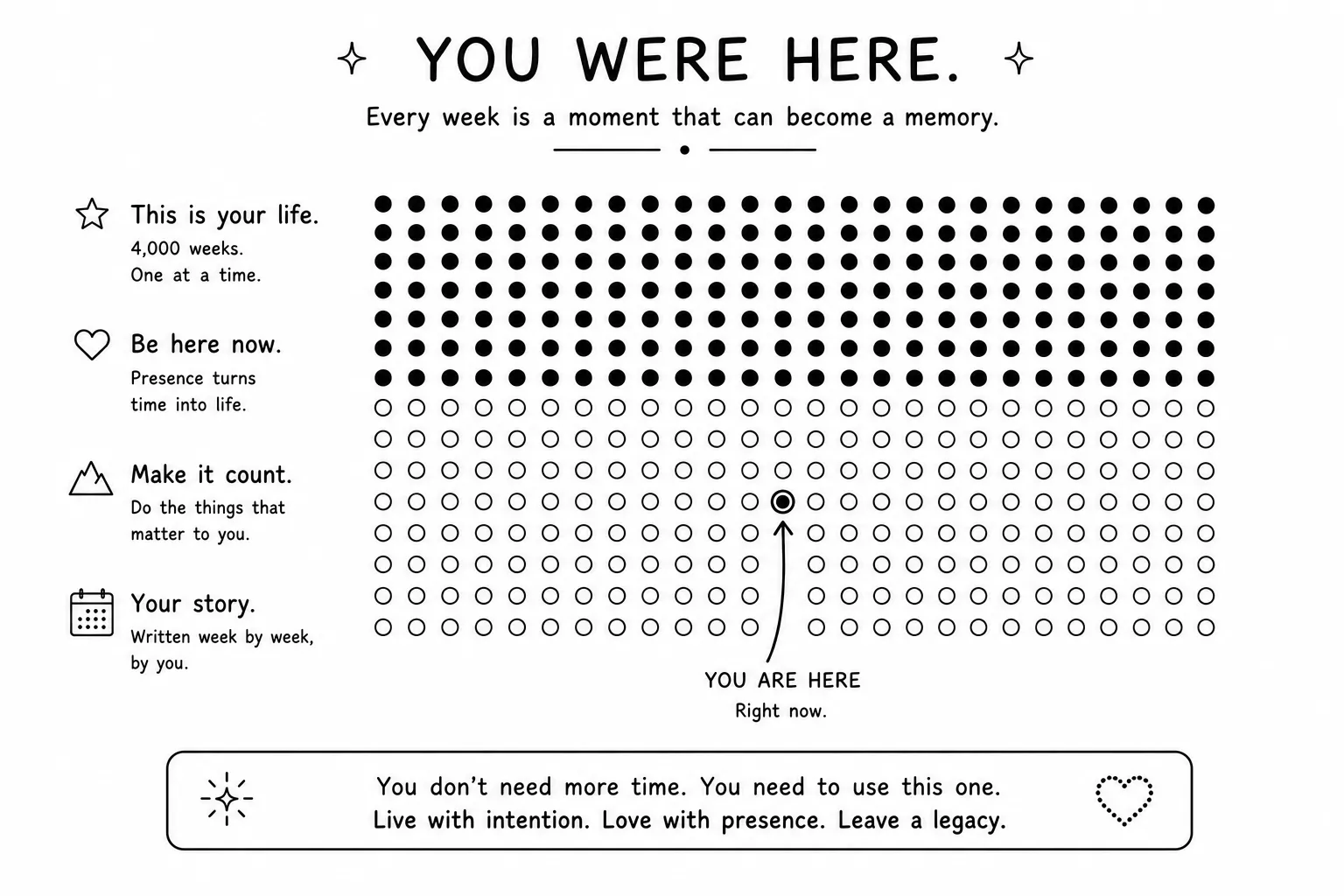
Memento mori — “remember you will die” — sounds like the least useful advice ever carved in Latin. You know already. Everyone knows. The Stoics’ insight was that knowing and remembering are different faculties: Seneca’s letters return again and again to the observation that we act rich in time while being poor in it, precisely because nothing in daily life reminds us.
So they built reminders. Coins with skulls. Paintings with hourglasses. A whispered “remember you are mortal” during Roman triumphs, if the legend holds. The technology has changed — wallpapers, phone lock screens, calendars of dots — but the mechanism is identical: put the fact where the eyes already go.
Why it focuses instead of frightens
The naive prediction is that a death reminder should make you anxious. In practice — and most people who live with a life calendar report this within a week — the effect is closer to triage. Deadlines concentrate the mind, and mortality is the only deadline that never moves. Small grievances get smaller against 4,000 weeks. Postponed phone calls get made. The effect fades, which is exactly why the Stoics made it ambient rather than occasional.
The failure mode is real, though: morbidity as aesthetic, skulls as decor, doom as a personality. The practice curdles when the reminder points at death instead of through it. The point was never the skull. It was the day the skull gives back.
A gentle protocol
- Choose a denominator you believe. Eighty years, ninety, your own estimate — the exact number matters less than having one.
- Make it ambient, not alarming. A quiet grid on the desktop beats a daily “YOU WILL DIE” notification by every measure that matters. You want a hum, not a siren.
- Attach one question to it. Ours is on the tin: what would make this week count? One intention, written down, visible next to the dots. The old masters paired the skull with fruit and flowers — mortality next to sweetness, so you’d reach for the sweetness.
- Let it fade, let it return. Some weeks you won’t see the grid at all. That’s not failure; that’s what week 2,041 of a human life looks like.
Practiced this way, memento mori isn’t dark at all. It’s the lightest possible touch on the steering wheel — a few dots, glanced at over coffee, asking mildly whether today’s plan matches the size of the canvas.
Free in the browser — or living on your Mac desktop, updated nightly.