By Mayank Bhardwaj · August 21, 2026 · 5 min read
Why does time go so fast? The science and the fix
Why time speeds up as you get older, why life feels like it's passing you by, and how to make time go slower — without guilt or a new system.
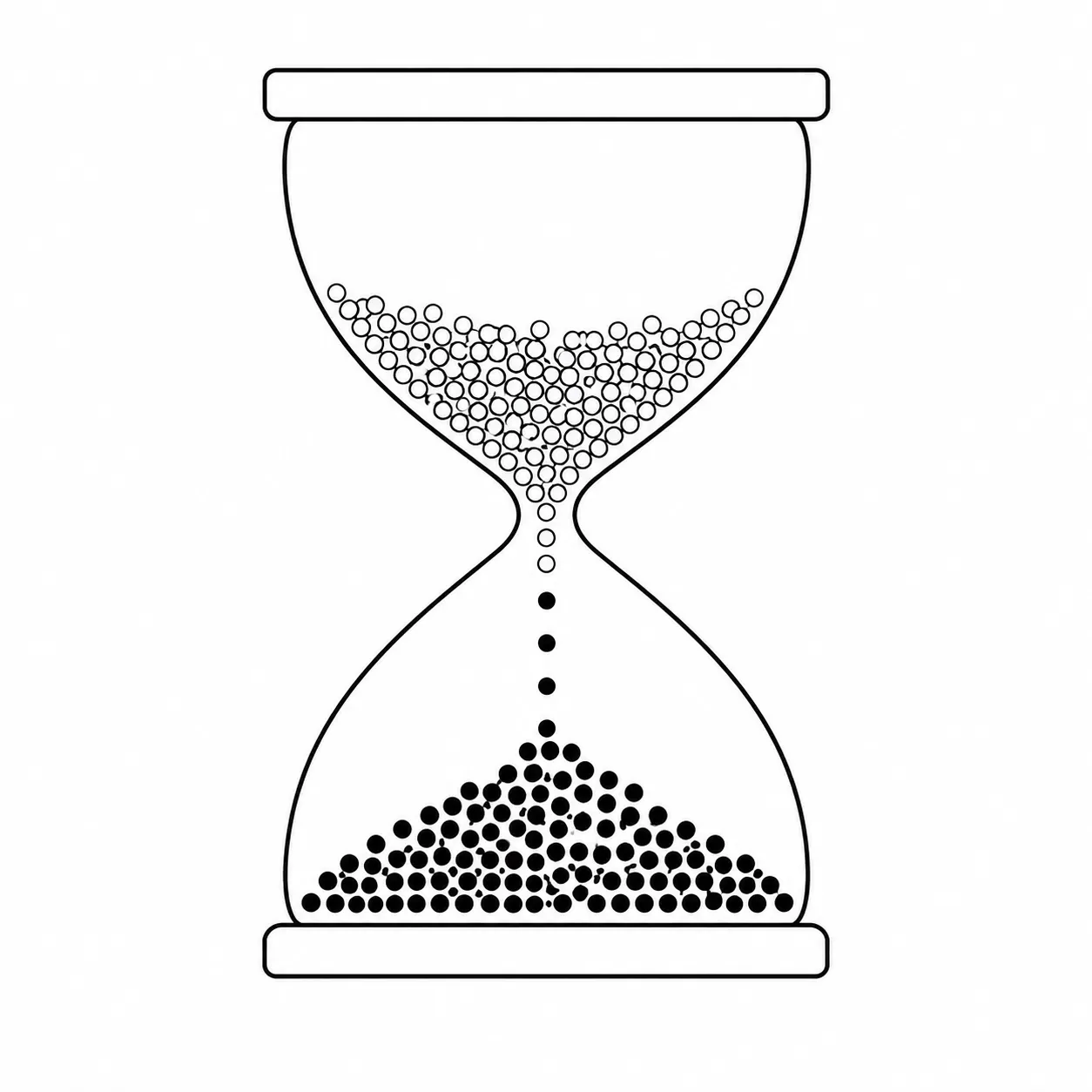
Somewhere around your late twenties, a strange thing happens: a year stops feeling like a year. Summers compress. Decembers arrive unannounced. You catch yourself saying “wasn’t it just March?” — and everyone around you nods, because they feel it too. If you’ve typed why does time go so fast into a search bar at 1 AM, you’re in enormous company: it is one of the most-asked questions about the human experience, and the communities where people speak honestly — the productivity and self-improvement corners of Reddit — return to it in thread after thread, thousands of upvotes at a time.
Here’s the good news buried in the science: time doesn’t actually speed up. Your recording of it thins out. And that is something you can change.
Why time goes faster as you get older
Two well-studied effects stack on top of each other.
The proportion effect. When you’re 10, a year is 10% of everything you’ve ever known — an ocean. At 40, it’s 2.5% — a puddle. Each new year is a smaller fraction of your whole life, so it feels smaller, even though the calendar disagrees. The math is unkind and it never reverses on its own.
The novelty effect. Neuroscientist David Eagleman’s work on time perception points at memory: your brain keeps detailed records of new experiences and compresses repetition into a single entry. A week of firsts — new city, new faces, new problems — gets written down in full and feels long in hindsight. Fifty weeks of the same commute get filed as one memory. That’s why childhood summers feel endless and adult years feel like a montage: childhood was almost all firsts.
Put the two together and you get the sensation every “life is just work, sleep, repeat” thread describes: not a lack of time, but a lack of recorded time. The routine isn’t stealing your hours. It’s stealing your memory of them.
“Life is passing me by” — why routine is the real thief
The feeling that life is passing you by is usually diagnosed as a motivation problem. It’s more often a visibility problem. Days are too small to notice disappearing — losing one never feels like an event. Months are too big to feel viscerally. So time leaks through the gap between units, and you only notice at the milestones: birthdays, New Year’s Eve, a friend’s kid suddenly being tall.
That’s why the same fix keeps surfacing independently, from Stoic writers to modern time-perception research: make the passage of time visible at the unit you can actually feel — the week. There are about 4,000 of them in a long life. Enough that you can relax; few enough that each one is visibly a real fraction of the whole. We’ve written before about why weeks beat days and months as the honest unit, and about what 4,000 weeks actually looks like drawn on one screen.
The guilt loop: why feeling bad about wasted time wastes more of it
If you’ve felt guilt about wasting time, you’ve probably also discovered the cruel mechanics of it: I wasted the evening → I feel terrible → I avoid thinking about it → I scroll to avoid thinking about it → I lose the next evening too. Thousands of people describe exactly this loop, and the top-voted advice in those threads is never “be harder on yourself.” It’s the opposite: you can’t get the lost time back, but you can stop adding weight to it — and progress made while feeling bad still counts.
This is why we’re careful with the memento mori idea. Seeing your life in weeks is clarifying for most people and heavy for some, and the difference is entirely in the framing. The grid isn’t a ledger of what you owe. The filled dots aren’t “wasted” — they’re simply yours: every one of them contains a day someone would have traded anything for. The only actionable dot is the current one. (We wrote a gentler, practical take on this in memento mori, practically.)
How to make time go slower — what actually works
Not slower on the clock — slower in the memory, which is where it counts.
1. Add firsts, even tiny ones. Eagleman’s finding, turned into practice: novelty is the anti-compression. A new route, a new recipe, one unfamiliar thing a week. You’re not entertaining yourself; you’re giving your brain something worth writing down.
2. Mark the weeks. A unit you see ending is a unit you remember having. This is the whole idea behind the life in weeks calculator: your life drawn as ~4,000 circles, the current one ringed. People consistently describe the first look as a before/after moment — not morbid, but focusing, like glasses for time.
3. Ask the week one question. Not a productivity system — one honest question at the start of each week: what would make this dot worth its place? One answer, not ten. Small enough to survive a bad Tuesday.
4. Check the remainder occasionally, not obsessively. Knowing there are 19 weeks left in the year or seeing your life percentage once in a while recalibrates the horizon. A glance is a compass; staring is a spiral. The current week number does the same job at year scale.
5. Put the picture where your eyes already go. A reminder you must remember to check isn’t a reminder. This is why we built the Mac app the way we did: your life-in-weeks calendar is the wallpaper, it fills one dot per week by itself, and it never sends a notification. The time-visibility habit with zero willpower required.
The honest summary
Time feels fast because ordinary weeks go unrecorded — by your memory and by your tools. You can’t slow the clock, and anyone selling you that is selling panic. What you can do is witness your weeks: see them, name one intention for them, and occasionally add a first. The people who do this don’t report dread. They report the opposite — the strange calm of finally seeing the whole picture.
You have roughly 4,000 weeks. The point of counting them isn’t to fear the number. It’s to stop losing them unwitnessed.
Free in the browser — or living on your Mac desktop, updated nightly.